For Real, Though (Pun Intended)
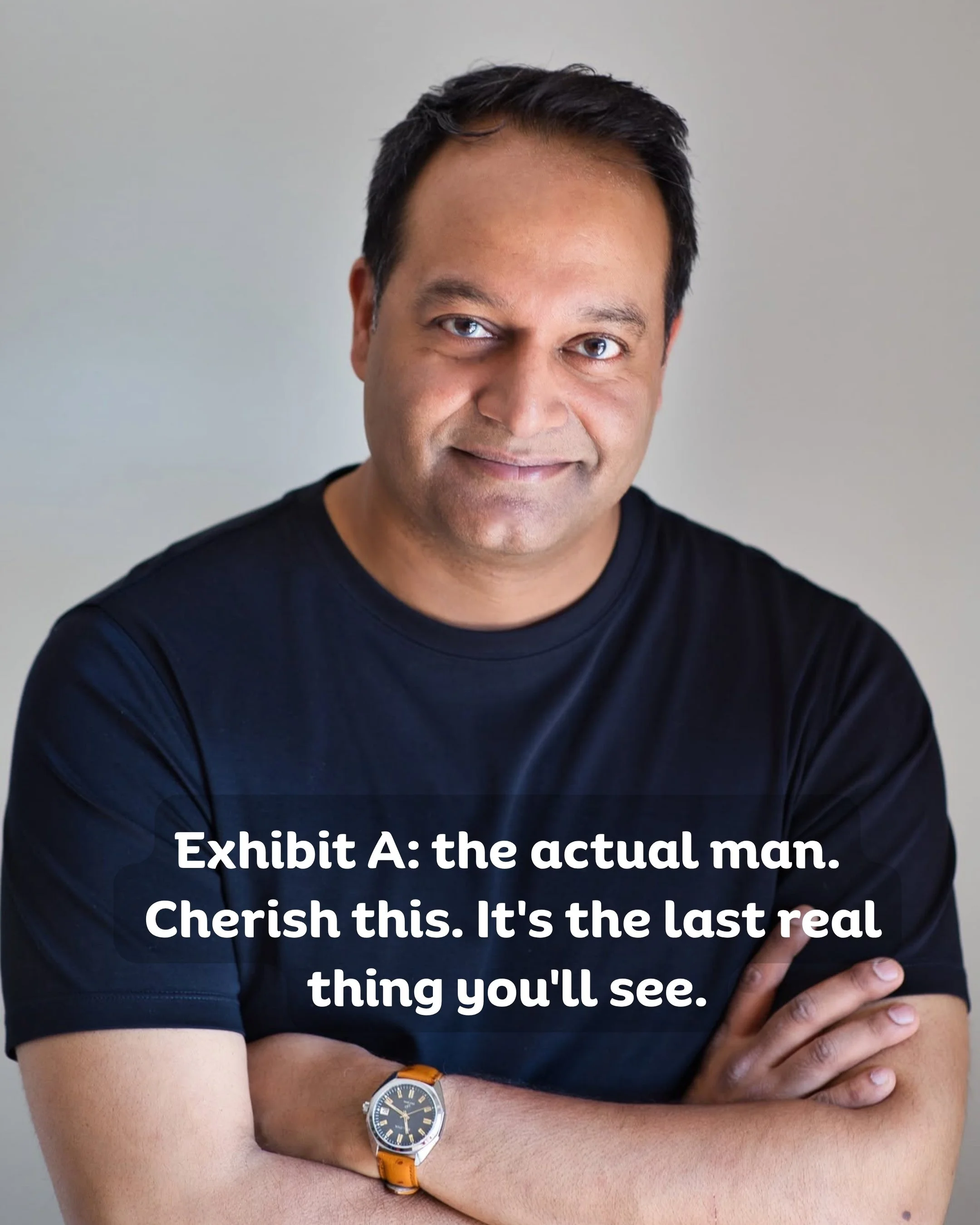
A case for real photos, featuring my husband as you've never seen him — because this is not him.
Meta's AI made some images from real photos of my husband. They are…let’s call them mesmerizing.
And this, my friends, is what AI decided he looks like:
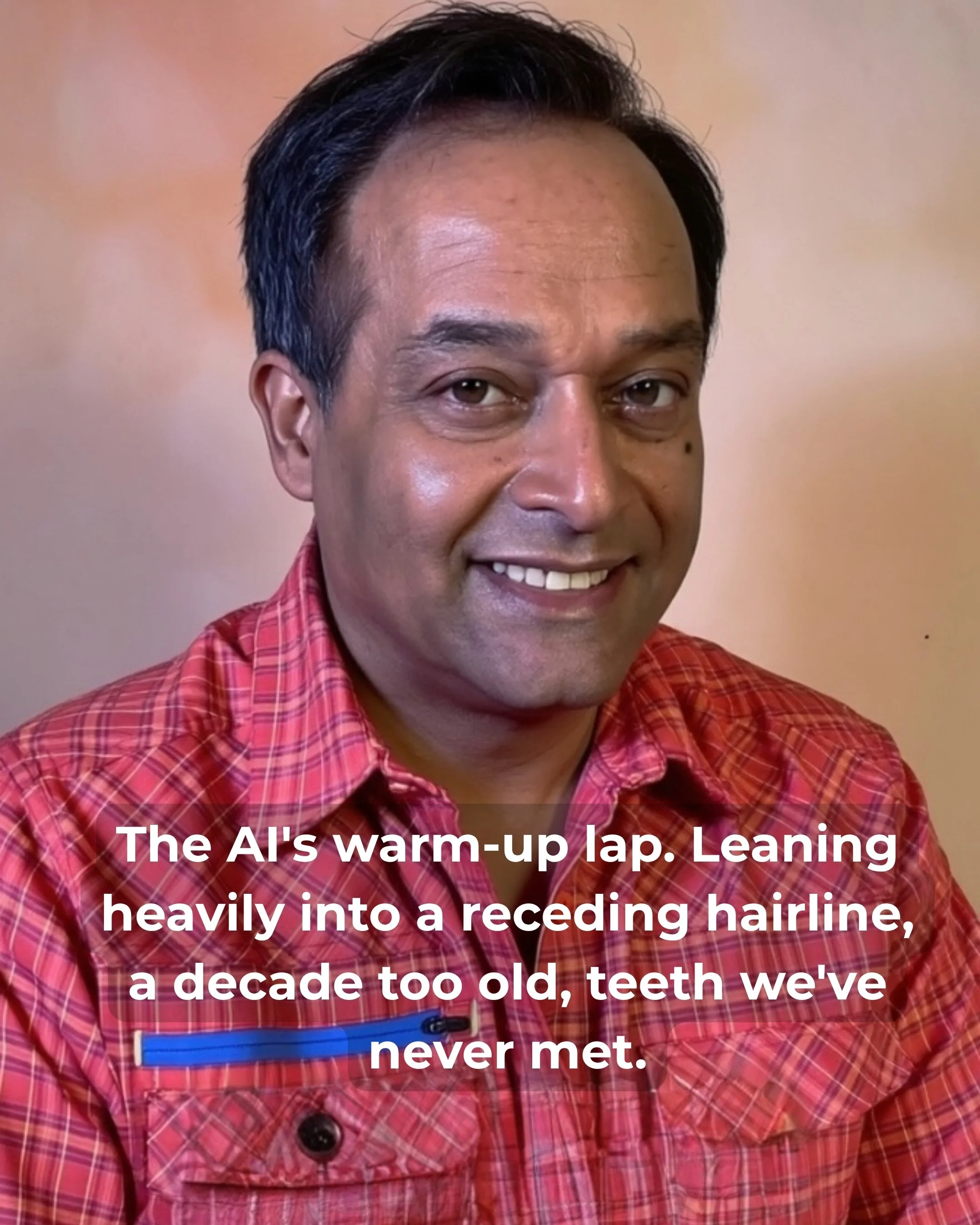
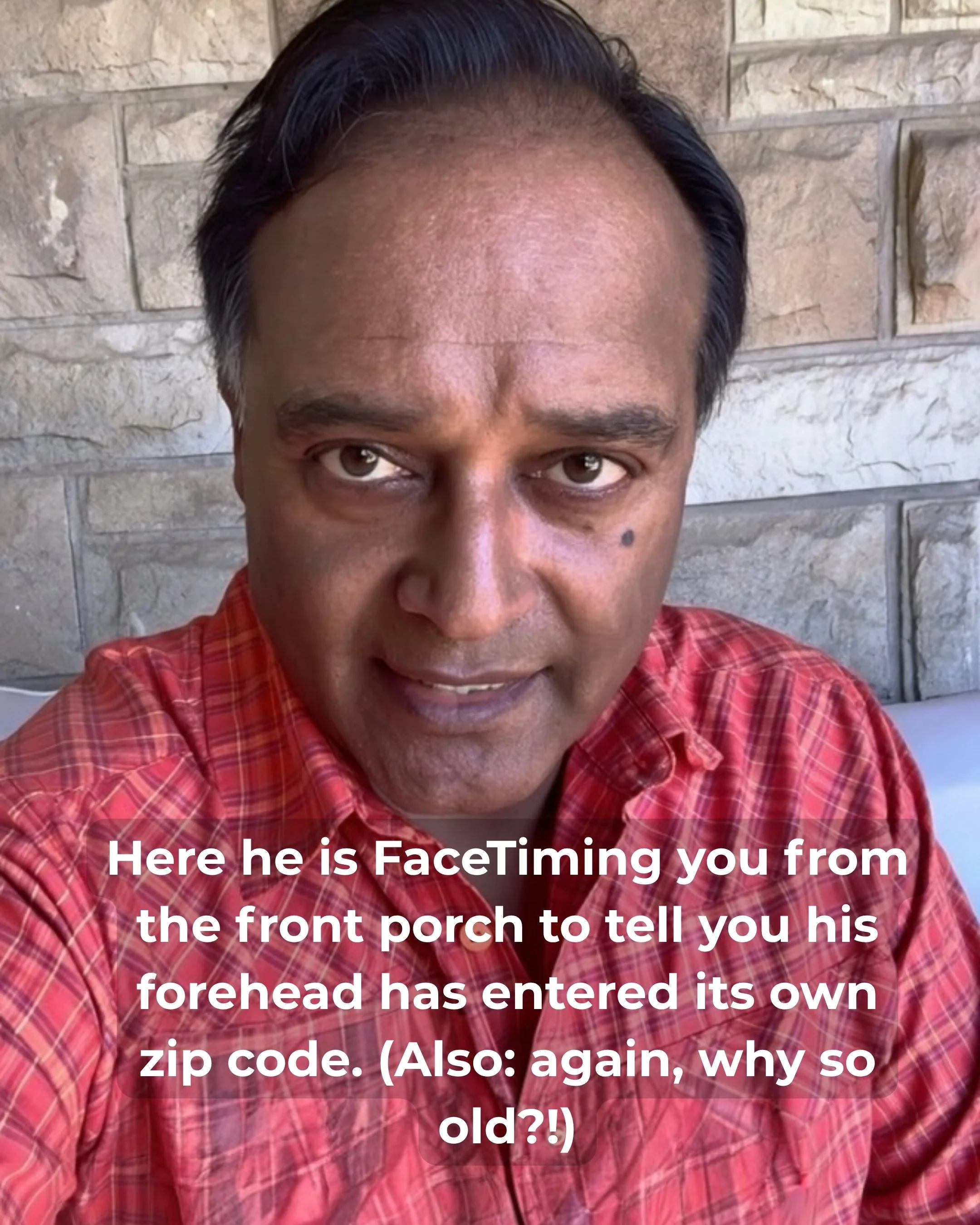
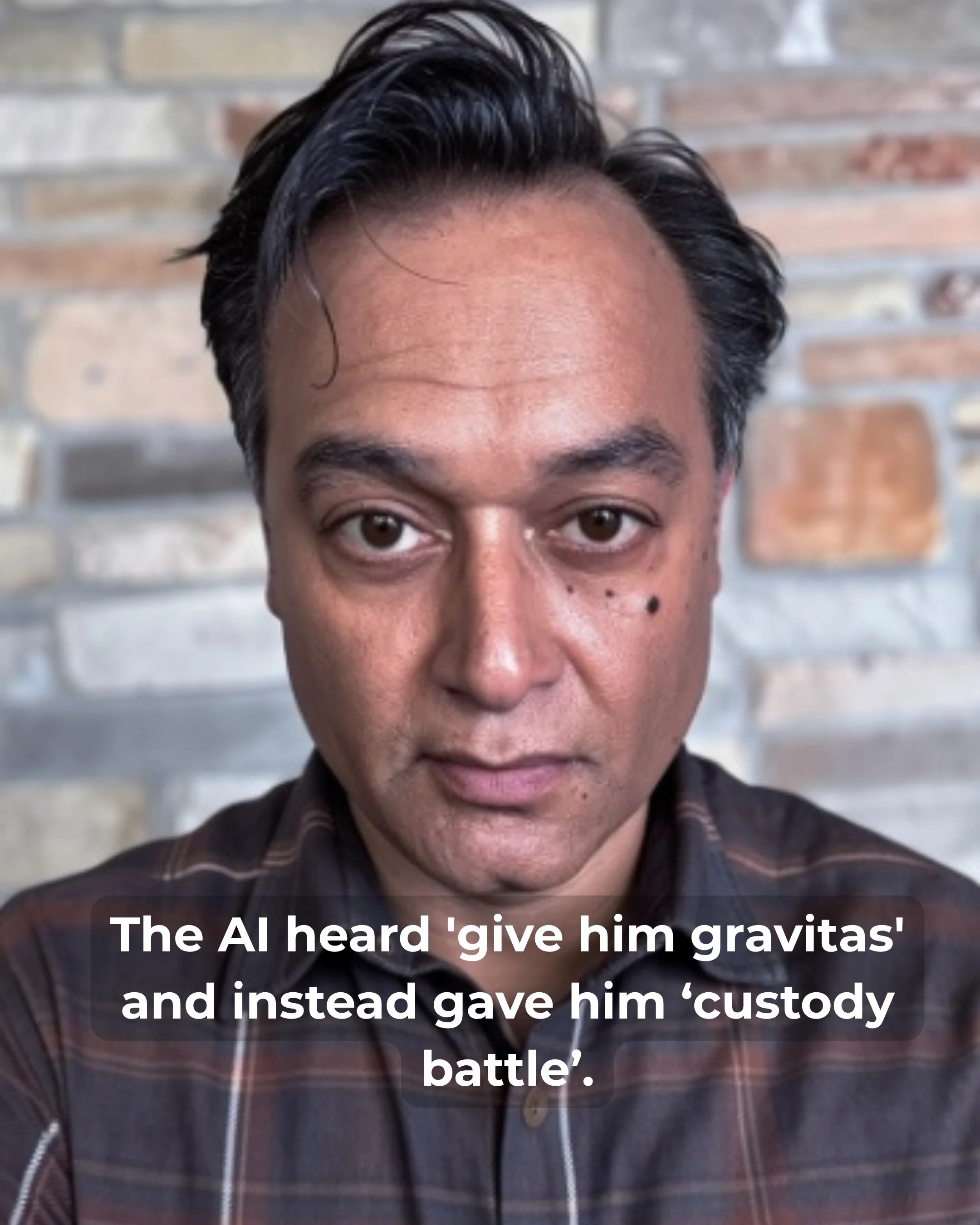
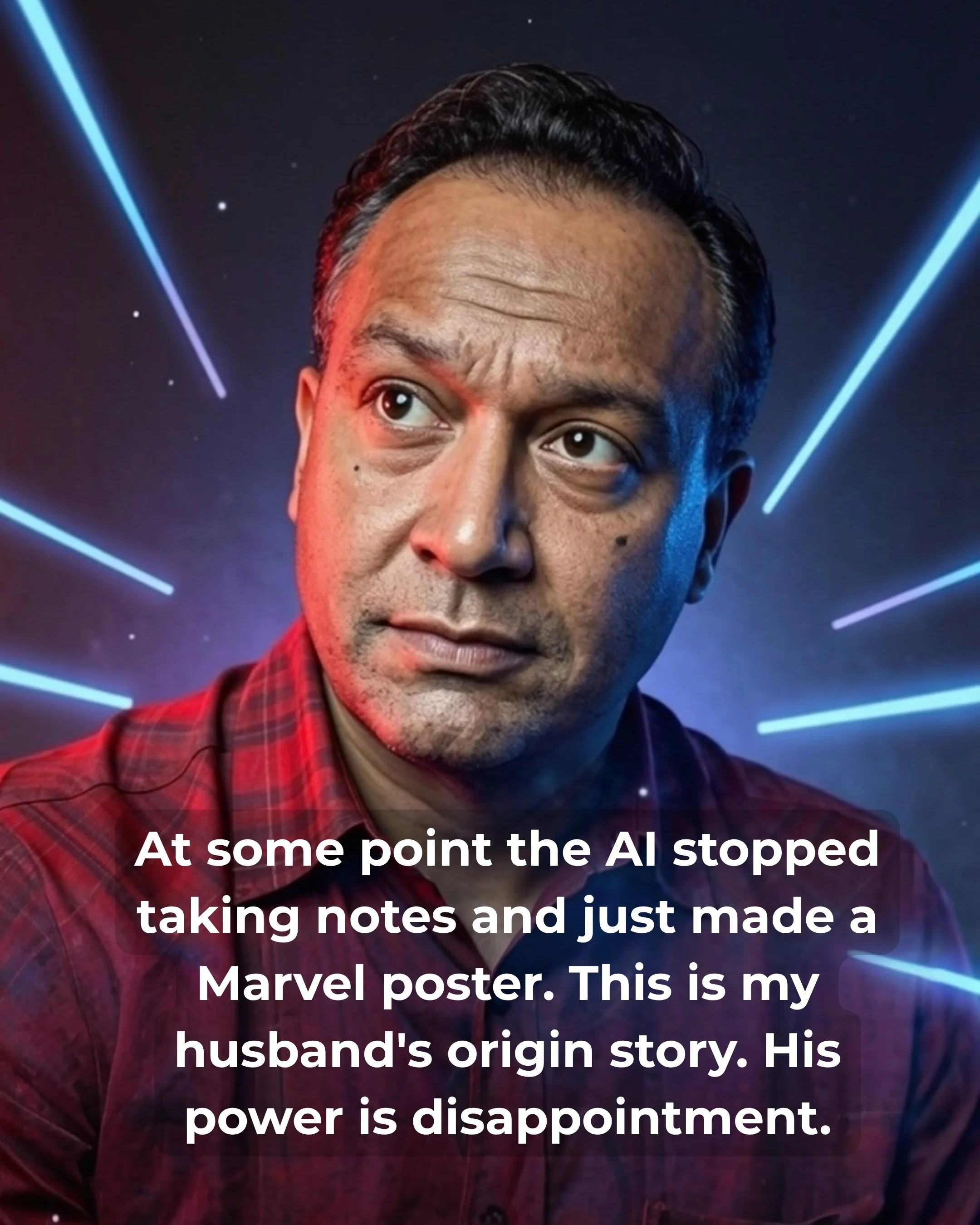
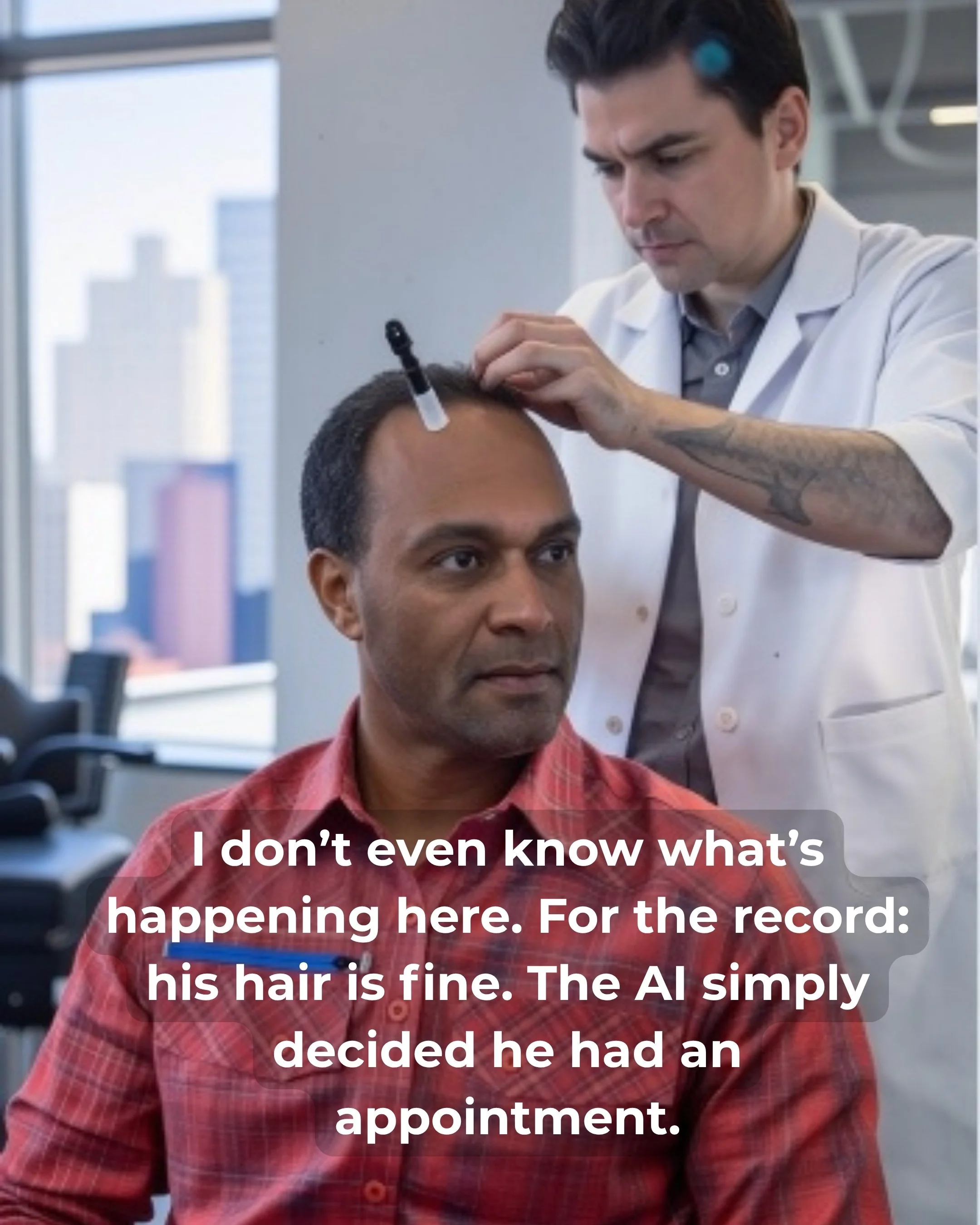
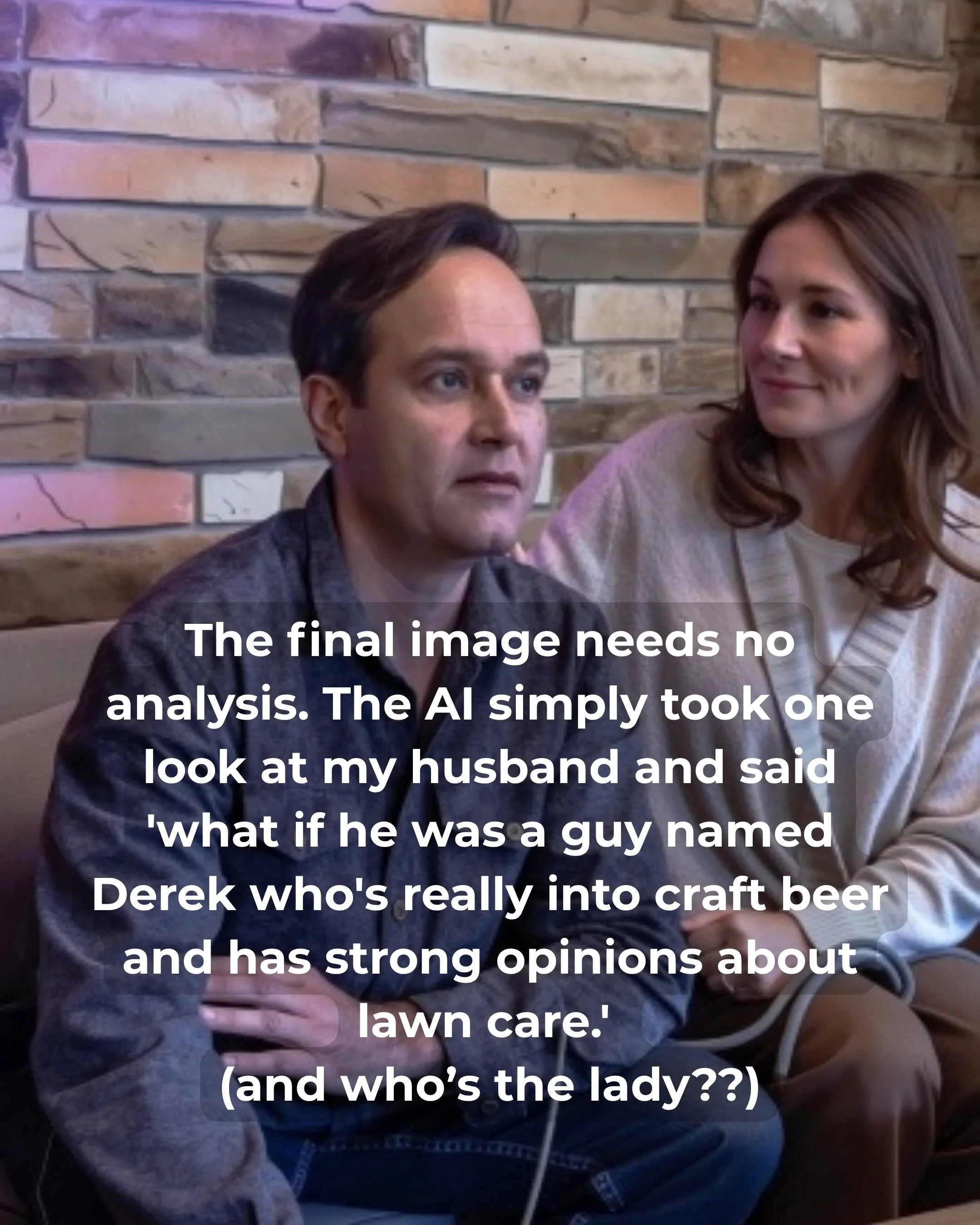
The AI was working from his actual face. It had the real thing right in front of it — and it still produced these wild images.
It's hilarious. And then it's a little unsettling. While these images are absurd (and entertaining), sometimes an AI-created image is almost impossible to identify.
Why Am I Showing You This?
Two reasons.
One: to prove what a good sport my husband is that he's letting me this on the internet for your general review.
Two — the bigger one: it perfectly illustrates the question I keep circling back to, both as a photographer and just as a person trying to make sense of things in 2026:
What's real anymore?
There's actually a whole trend right now that's a response to this. Photographers (and everyday Instagram people) leaning into intentionally imperfect images. Slightly out of focus. Hair not fixed. Clothes disheveled, on purpose.
The idea is that imperfection reads as proof of authenticity, because AI still trends toward the too-polished.
And it works. For now.
Give it a year. AI will learn to fake imperfection too.
So the answer isn't in the aesthetic. It's in the question underneath:
why are we taking pictures in the first place?
Increasingly, it seems like we're doing it for outside validation. The likes. The impressions. Distant Instagram acquaintances we'll never actually see in person again. Maybe a click to a website.
And listen — I want some of those things too, sometimes. I run a business.
But here is the hill I am willing to die on:
The real reason we take pictures is to stop time.
To capture a person as they are, right now, in this fleeting moment.
That's the whole thing.
It sounds obvious when I say it out loud. But do we really have that in mind when we're pointing the camera? Not in an era this full of noise.
And this is exactly why AI-generated images hit differently in photography than in other fields.
Because if the point of a photograph is to stop time, then a fake photograph doesn't just fail at being a photograph.
It does the opposite. It generates a moment that never happened.
Welcome to the "Wait, Is That Real?" Era
You've probably felt it even if you haven't named it. Your feed is filling up with images of things that never happened.
And here's the part that should worry all of us:
Even the professionals can't tell anymore.
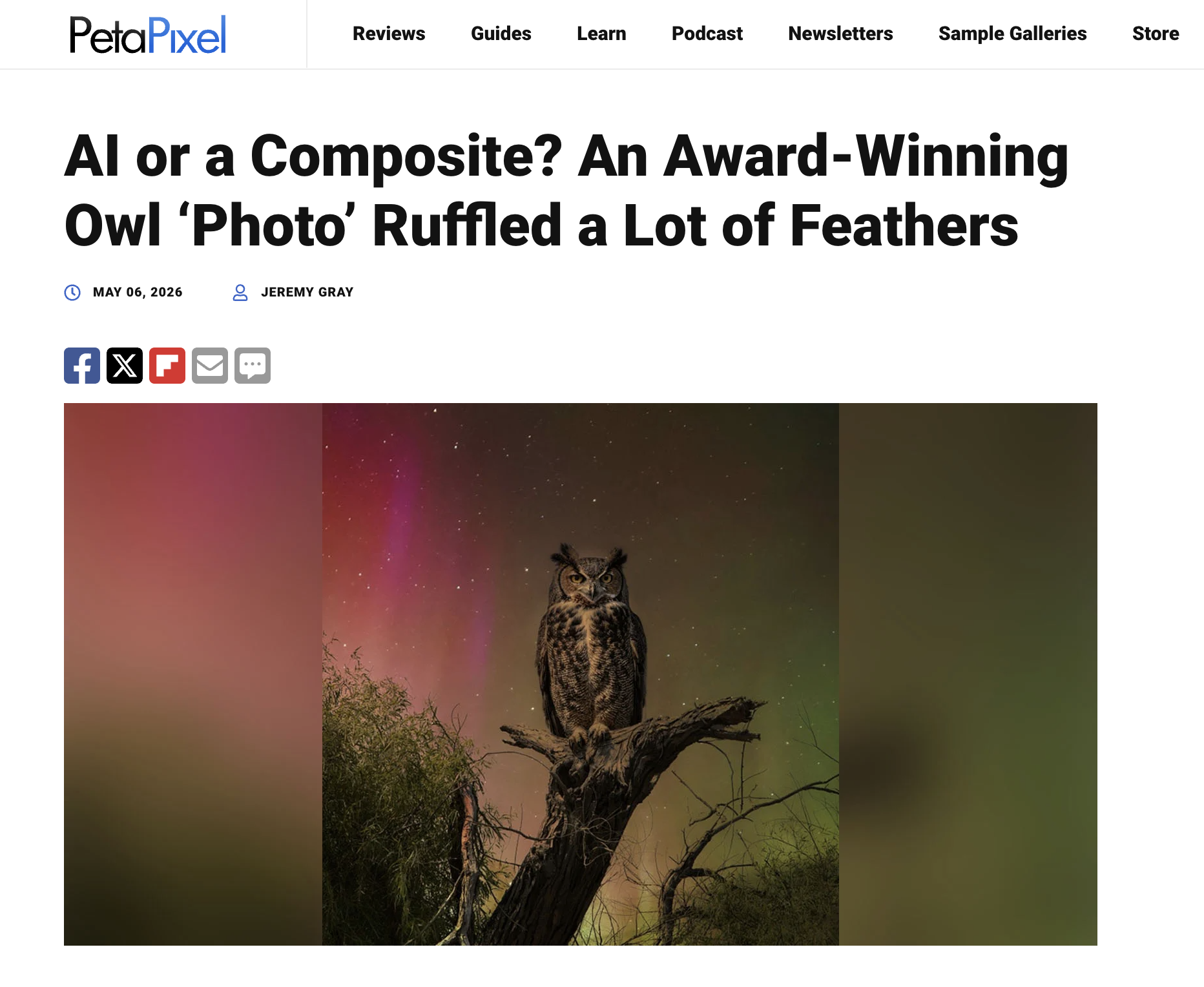
Just this spring, the National Wildlife Federation had to strip the top prize from its Garden for Wildlife Photo Contest after commenters immediately clocked the winning owl photograph as a fake.
A great horned owl. The owl's talons had too many digits. Photographers online called it in minutes.
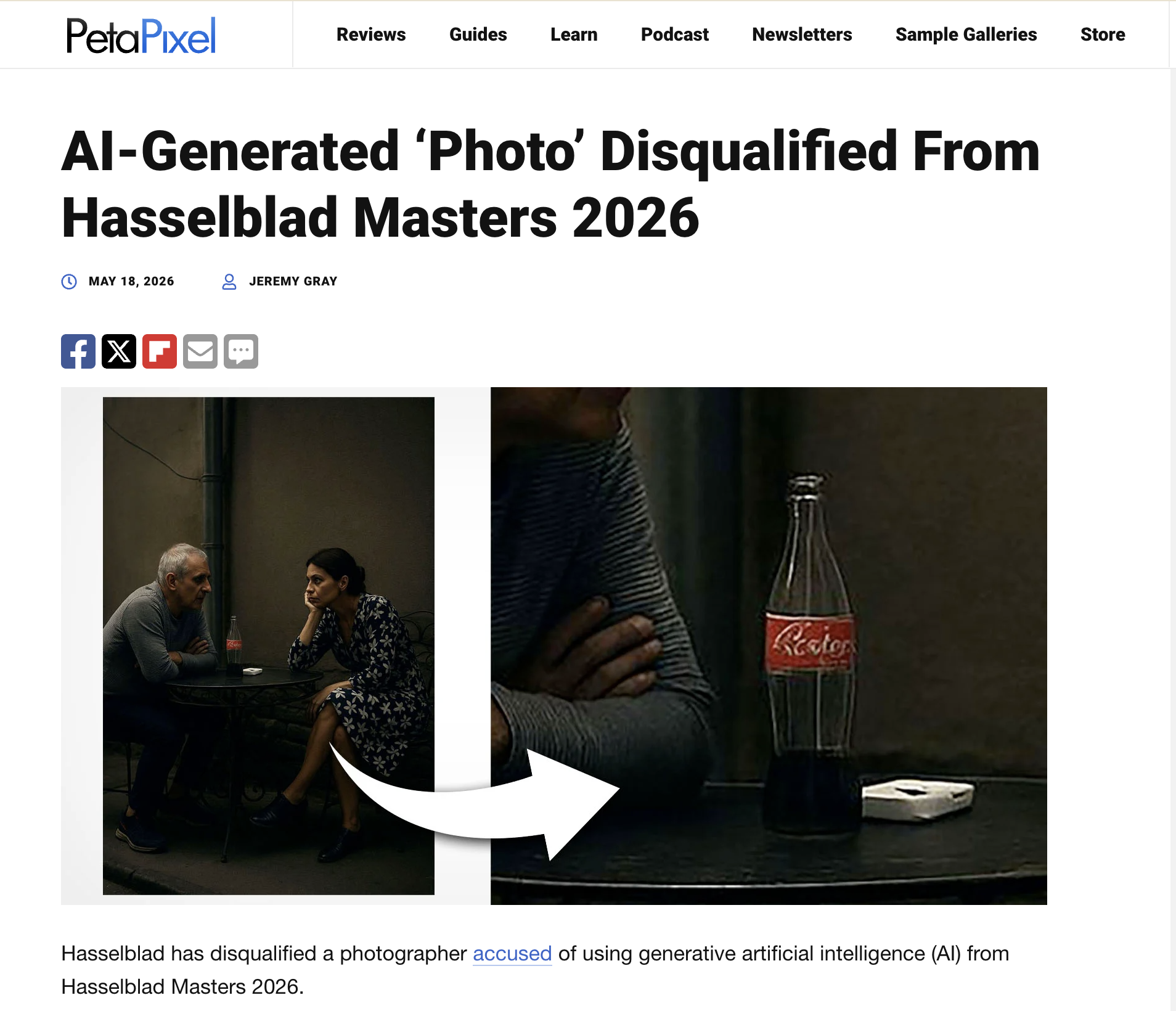
Then Hasselblad — one of the most prestigious names in the entire industry — had to disqualify a finalist from its Masters 2026 competition. Online commenters had spotted a Coca-Cola bottle with garbled AI-generated text sitting on the table in a supposedly candid street photo.
The Hasselblad judges missed it.
Meanwhile, Instagram is over here slapping "AI Info" labels on real photographs while actual AI images sail right past unmarked.
If the judges at Hasselblad can get fooled. And the National Wildlife Federation can get fooled. And Instagram's own detection can't tell the difference.
What chance do the rest of us have, scrolling through our feeds at 9 p.m. with tired eyes?
Even the experts can't reliably tell anymore.
Which sounds like bad news. And it is. Mostly.
But it also makes something else true: a real photograph of a real moment — of your family, in your backyard — is now more special.
AI can generate a picture of a family.
It cannot generate a picture of your family, in your backyard, on that specific Tuesday in the fall your daughter was seven.
A real photograph is proof. This happened. They were this small. You were there too.
So yes, I'm biased
I take real pictures of real people for a living. So take that for what it's worth.
But I'd argue I'm also right.
-erin